How to Arrange Flowers Like a Florist
Professional flower arranging looks effortless because the principles behind it are simple. Learn the same techniques florists use and your arrangements will immediately improve.

The difference between an amateur arrangement and a professional one is rarely about the flowers themselves. It is about structure, proportion, and the confidence to leave space. Professional florists follow a set of principles that are learnable by anyone: understanding flower forms, working from the outside in, using foliage as architecture, and trusting the arrangement to do its work without being overloaded. Once these principles are understood, the quality of your arrangements will improve immediately.
The three flower forms
Florists work with three types of flowers in every arrangement. Focal flowers are the stars: large, round, or complex blooms that draw the eye, such as roses, peonies, dahlias, and sunflowers. Spike flowers provide movement and height: delphiniums, snapdragons, gladioli, and foxgloves. Filler flowers create texture and depth: gypsophila, waxflower, chrysanthemum sprays, and blossom. A well-balanced arrangement typically uses all three forms, with focal flowers as the largest proportion and fillers as the smallest.
Start with foliage
The single most transformative thing most amateur arrangers can do is to start with foliage rather than flowers. Foliage creates the architecture of the arrangement: the framework into which flowers are placed. Strip the lower third of all stems, fill your vase with clean water, and place foliage first, creating a roughly triangular or dome-shaped form. Once the foliage structure is in place, your flowers have something to lean against and sit within, which immediately produces a more natural and professional result.
“Foliage is the grammar of flower arrangement. Without it, even beautiful flowers are just words on a page with no sentence structure.”
Proportion and the rule of odd numbers
Odd numbers are more visually dynamic than even numbers in flower arrangements. Three focal flowers are more interesting than two or four; five stems of a spike flower create more movement than six. The height of the arrangement should typically be one and a half times the height of the vase: taller for dramatic effect in high-ceilinged rooms, shorter for low-table centrepieces. These are not rules to be followed rigidly but principles to understand so that when you break them, you do so deliberately.
Working in layers
Professional florists work in layers rather than placing flowers one at a time. Once the foliage structure is in place, add the focal flowers first, distributing them through the arrangement at different heights. Then add spike flowers if using them. Finally, fill gaps with filler flowers and adjust the foliage. Step back frequently and look at the arrangement from a distance: problems that are invisible at close range become obvious from two metres away.
Florist techniques to adopt immediately
- Strip all leaves that will sit below the waterline before arranging
- Cut stems on a 45-degree angle for better water uptake
- Use a grid of tape across the vase opening to support stems in wide-necked vessels
- Start with foliage to create the structural framework
- Place focal flowers first, then spikes, then fillers
- Work with odd numbers of stems for each variety
- Step back from the arrangement every few minutes and assess from a distance
Continue reading
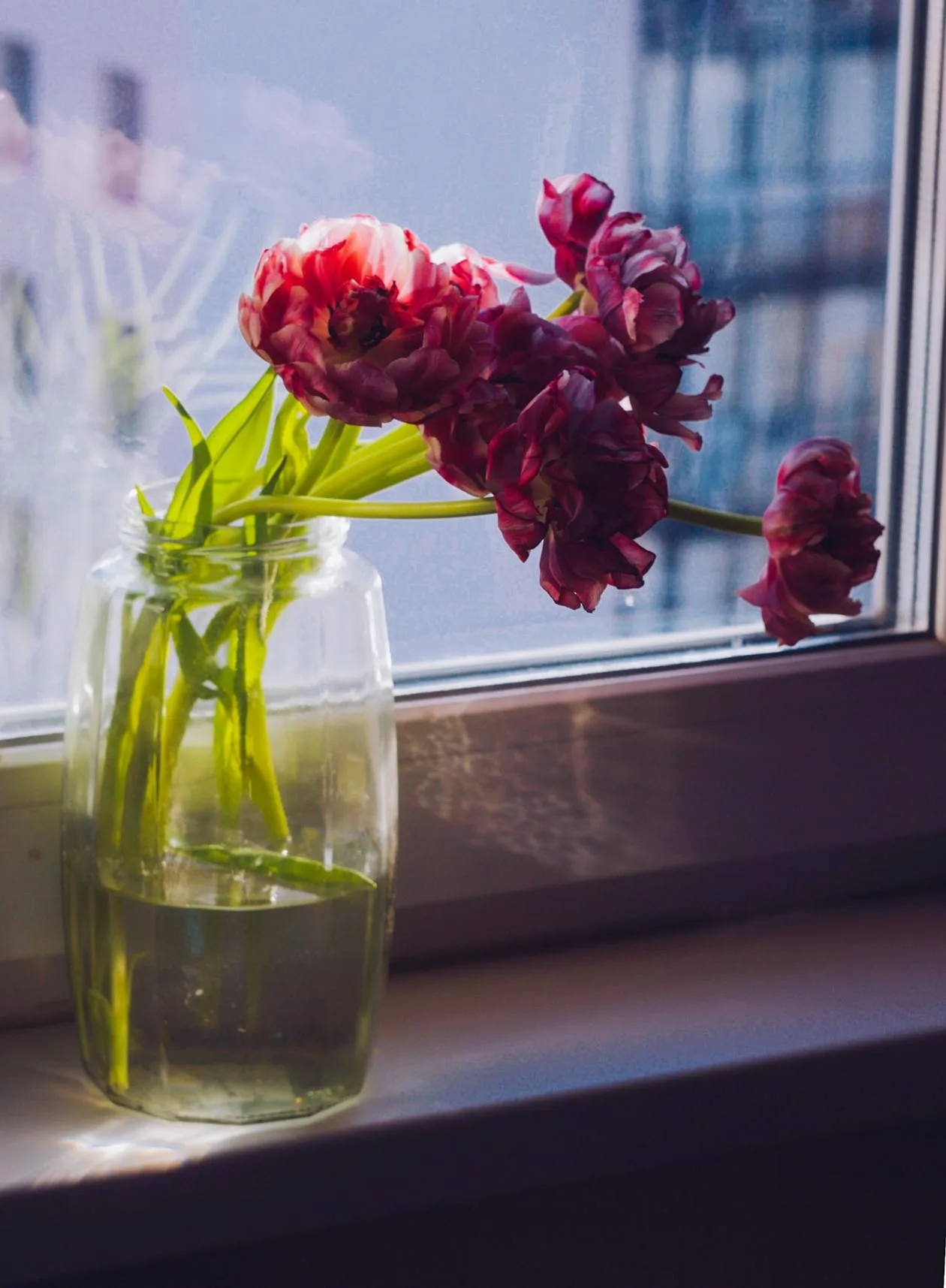
Choosing the Right Vase for Your Flowers
The right vase can make good flowers look great. The wrong one can make great flowers look mediocre. This guide will help you choose and use vases more deliberately.
Read more →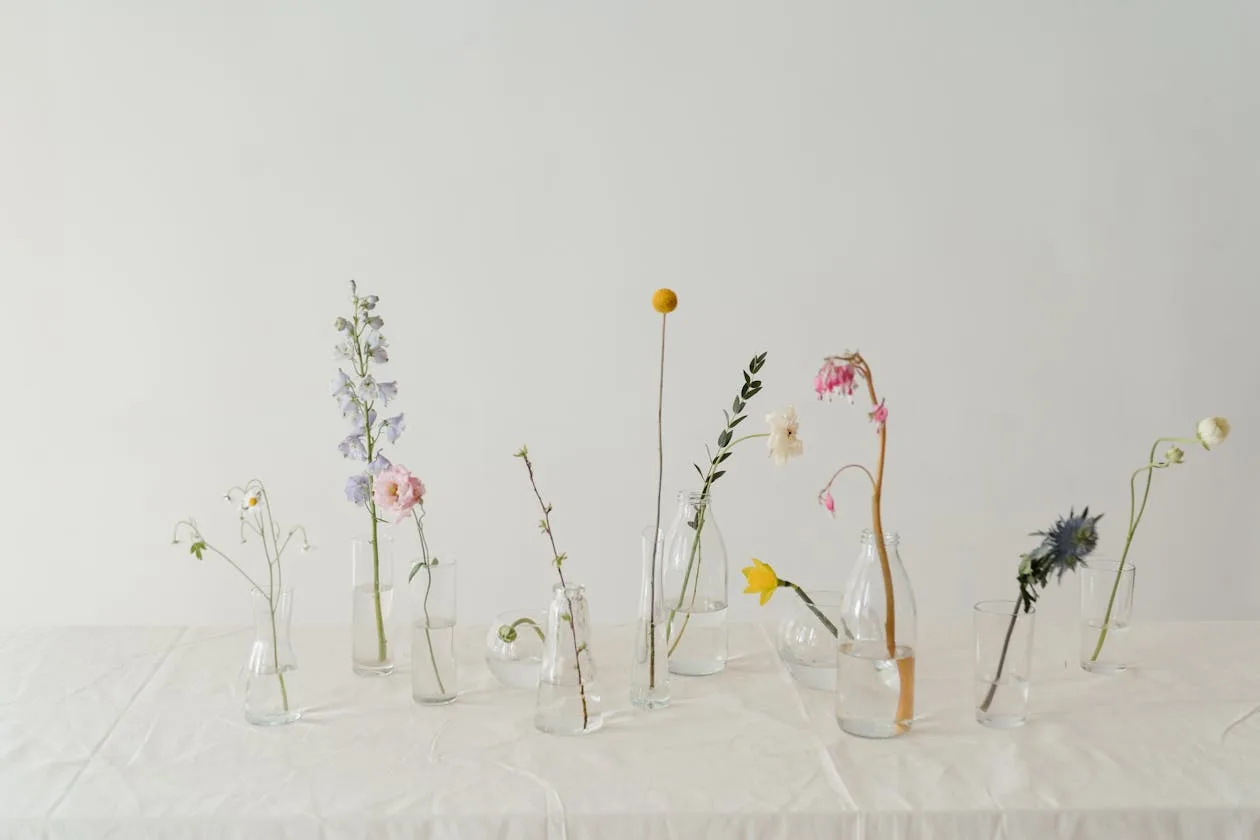
Water, Stems, and Vase Life: The Science Explained
The single biggest factor in how long cut flowers last is water management. Understanding the science behind stem hydration will help you keep flowers alive significantly longer.
Read more →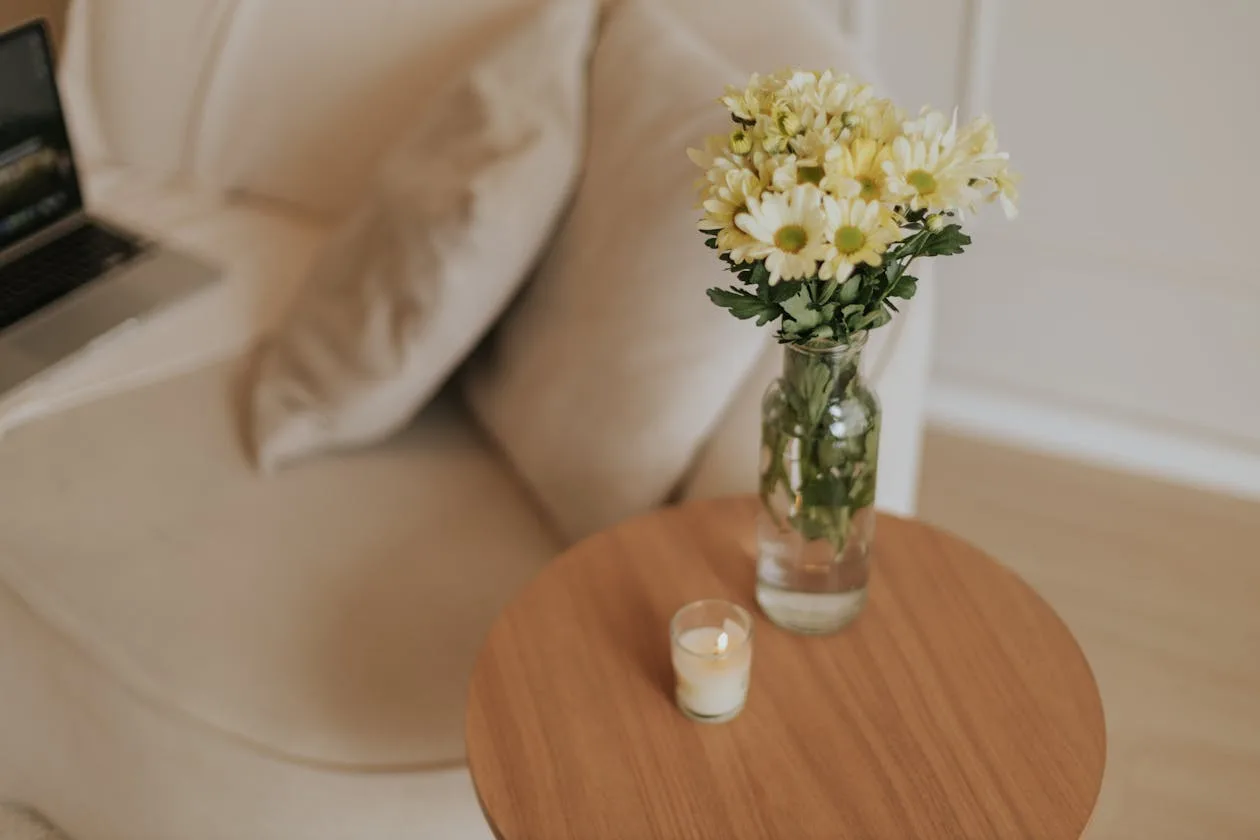
Should You Keep Flowers in the Bedroom?
The idea that plants and flowers should not be kept in bedrooms is persistent and almost entirely unfounded. Here is the actual evidence, and what it means for your choices.
Read more →