Water, Stems, and Vase Life: The Science Explained
The single biggest factor in how long cut flowers last is water management. Understanding the science behind stem hydration will help you keep flowers alive significantly longer.
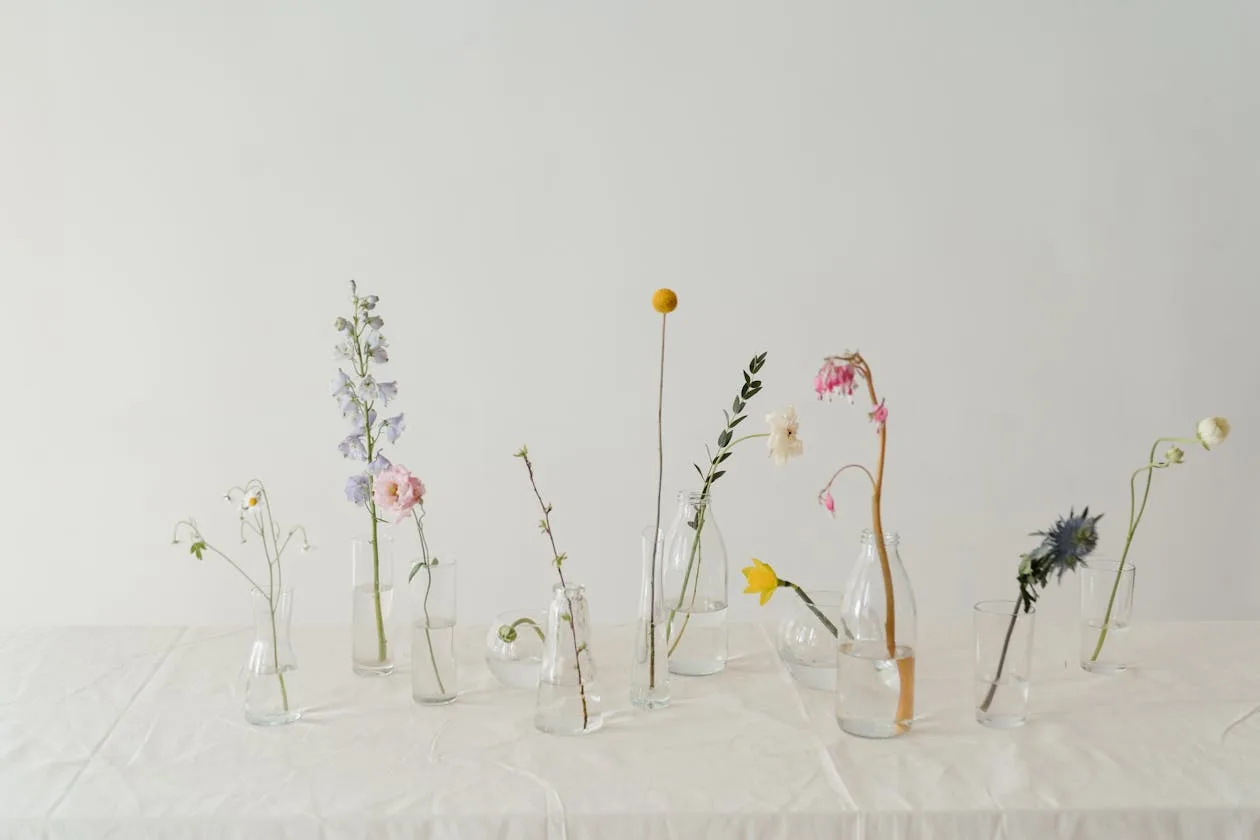
Cut flowers die primarily because they cannot access water efficiently. From the moment a stem is cut from its parent plant, a race begins between the flower's need for hydration and a series of processes that impede water uptake: air entering the cut stem, bacterial growth in the vase water, and the natural sealing responses the plant uses to prevent infection. Understanding these processes and managing them correctly is what separates flowers that last three days from flowers that last ten.
The stem cut: why it matters
When a stem is cut from a plant, air immediately enters the cut end, blocking the xylem vessels through which water travels. Recutting the stem at an angle, ideally under water, creates a fresh surface that allows immediate water uptake before air can re-enter. The 45-degree angle is used partly to create a larger surface area but primarily to prevent the cut end from sitting flat against the bottom of the vase, which would block the opening entirely. For woody stems such as roses and lilacs, splitting the base of the stem with a knife provides even better water uptake.
Bacterial growth and clean water
Bacteria are the primary enemy of vase life. They colonise the cut stem opening and the water around it, producing compounds that block the vascular system and accelerate deterioration. Clean vases, clean water, and the removal of all foliage that would sit below the waterline are the three most effective steps in managing bacterial growth. Flower food packets contain a biocide component that inhibits bacterial growth, a sugar that feeds the flower, and an acidifier that improves water uptake. Using them correctly extends vase life significantly.
“Flowers do not die because they are fragile. They die because the water cannot reach them. Fix the water, and you fix the problem.”
Evidence-based vase life tips
- Recut stems at a 45-degree angle before placing in water
- Remove all foliage that will sit below the waterline
- Use a clean vase: wash with hot water and washing-up liquid before each use
- Add flower food to the water: it contains biocide, sugar, and acidifier
- Change the water completely every two to three days
- Keep away from direct sunlight and heat sources: warmth accelerates deterioration
- Keep away from fruit bowls: ethylene gas released by ripening fruit ages flowers rapidly
The ethylene question
Ethylene is a naturally occurring plant hormone that accelerates ageing and ripening. It is released in significant quantities by ripening fruit, damaged plant material, and some cut flowers. Carnations, sweet peas, and gerberas are among the most ethylene-sensitive flowers, collapsing rapidly if exposed. Keeping flowers away from fruit bowls, away from dying flowers in the same arrangement, and away from cigarette smoke all reduce ethylene exposure and extend vase life.
Continue reading
10 Flowers That Last Longer Than a Week
Some flowers are gone in three days. Others stay beautiful for two weeks or more. Know the difference before you order — and make every bouquet count.
Read more →
How to Make Cut Flowers Last Longer: The Science
Cut flowers die for predictable, preventable reasons. Understanding the science behind vase life means you can do something about it. Here is what actually works.
Read more →
How to Arrange Flowers Like a Florist
Professional flower arranging looks effortless because the principles behind it are simple. Learn the same techniques florists use and your arrangements will immediately improve.
Read more →