What to Write in a Flower Card
The flowers do most of the work. But the card still matters. Here is how to write something that is heartfelt without being awkward, for every occasion.
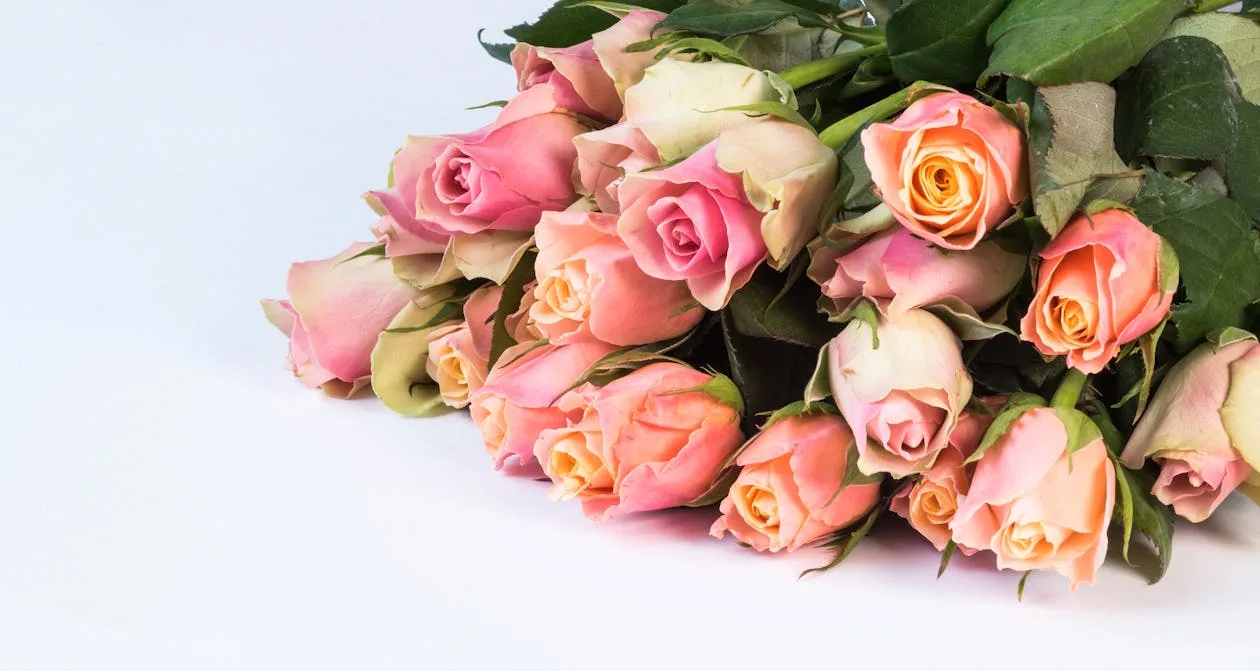
Most people find the card harder than the flowers. The flowers, at least, can be chosen from a list. The card requires something original, something personal, something that will not sound ridiculous when read aloud. The good news is that flower card writing has a few reliable principles, and once you understand them, it becomes considerably less daunting.
The first principle: say the specific thing
The most powerful flower card messages are not grand or elaborate. They are specific. 'Thank you for staying with me last Tuesday' is more moving than 'Thank you for everything.' 'I am so proud of you' addressed to the exact achievement matters more than a generic congratulations. 'I have been thinking about you since we spoke on Wednesday' is intimate in a way that 'thinking of you' never quite achieves. The specific detail is what makes a card a message rather than a gesture.
By occasion: what to write
Card messages by occasion
- Birthday: 'Happy Birthday. Here is to another year of [something specific they love or achieved].'
- Anniversary: 'Still my favourite person. [Year number] years of proof.'
- Sympathy: 'I am so sorry. No need to reply. I just wanted you to know I am thinking of you.'
- Get well: 'No rushing. Just rest, and let these cheer the windowsill while you do.'
- Congratulations: 'You worked so hard for this. Watching you succeed has been a genuine pleasure.'
- Thank you: 'I am not sure I said it properly at the time. These are the words that come closest: thank you.'
- Just because: 'No occasion. I just thought of you, and these seemed right.'
The tone question
Write in the voice you actually use with this person. If you would normally sign off a message with a joke, put the joke in the card. If your relationship is formal, the card can be formal. The discomfort people feel writing flower cards often comes from trying to write in a register they do not actually use: reaching for poetic sentiment when their natural mode is dry wit. Authenticity is more moving than eloquence.
“The best card message is the one that sounds unmistakably like you. The recipient should hear your voice when they read it.”
What to avoid
Avoid clichés where possible: 'Wishing you all the best' and 'With deepest sympathy' are not wrong, but they are the lowest-effort option and the recipient will feel that. Avoid explaining the flowers: 'I chose peonies because I know they are your favourite' is better left as just 'Your favourites.' The less you explain, the more generous the gift feels. And avoid the trap of writing too much: three well-chosen sentences outperform a paragraph of good intentions.
For moments you do not have words for
Sometimes the occasion is too large for any card. Grief, particularly, defeats words. In those moments, it is entirely appropriate to say exactly that: 'I do not have the right words. But I wanted you to know I am here.' Honesty about wordlessness is its own form of eloquence, and the flowers carry the weight that the card cannot.
Continue reading
The Perfect Bouquet for Every Occasion
Birthday, anniversary, new baby, thank you, sympathy — each occasion has its own language. Here's how to send exactly the right flowers every time.
Read more →
The Funeral Flowers Guide
Funeral flowers are one of the most important gestures we make, and one of the least discussed. Here is a thoughtful and practical guide to getting them right.
Read more →
Flowers for Difficult Moments
Some moments are too large for words. Flowers can carry what language cannot. Here is how to choose and send flowers when the occasion is grief, illness, or loss.
Read more →