Giving Flowers to Teachers: How to Get It Right
End-of-term flowers for a teacher are one of Britain's most common flower-giving moments, yet they are often approached without thought. The flowers you choose say more than you might expect.
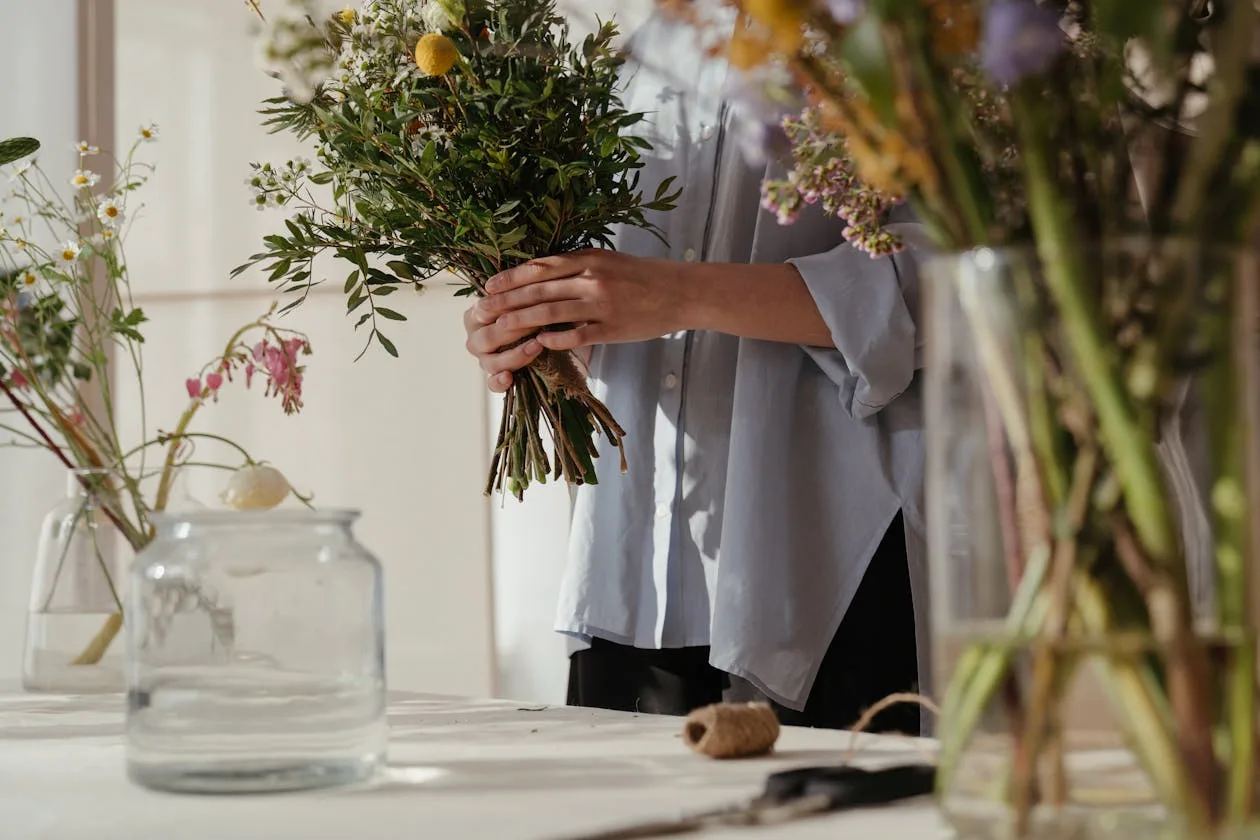
At the end of the school year, British classrooms fill with cellophane-wrapped bouquets deposited shyly on desks by children whose parents have done the right thing without quite knowing why. Flowers for teachers are a fixture of British school culture and yet, like so many flower-giving occasions, they are often approached on autopilot. The result is frequently a uniform collection of supermarket mixed bunches that, through no fault of their own, fail to feel personal.
What teachers actually appreciate
A teacher who has received thirty bouquets will notice and genuinely appreciate one that is different. That does not mean expensive; it means considered. A single variety in a beautiful colour, a small plant that will last rather than a cut flower that will not, or a simple hand-tied bunch from a local florist all signal that the giver put real thought into the selection. The accompanying card matters too: a sentence that names something specific the teacher did is worth more than a hundred generic thank-yous.
“After twenty years of teaching, the flowers I remember are not the most expensive ones. They are the ones that arrived with a specific, personal note.”
— Primary school teacher, London
Flowers that work well for teachers
Long-lasting flowers are a kindness: a teacher at the end of term may be too tired to tend to something fragile. Chrysanthemums, lisianthus, carnations, and alstroemeria all survive well in a classroom or staff room. For something more festive, sunflowers in July or dahlias in September are season-appropriate and visually joyful. Avoid strongly scented flowers if you are not certain about allergies: lilies and some roses can cause discomfort in enclosed rooms.
Teacher flower-giving checklist
- Choose long-lasting varieties: chrysanthemums, carnations, lisianthus, or alstroemeria
- Consider a small plant such as an orchid or succulent that outlasts a bouquet
- Avoid strongly scented flowers unless you know the recipient has no sensitivities
- A local florist hand-tied bunch will feel more personal than a supermarket wrap
- Write a specific note: one sentence about something they taught you
- If giving as a class, pool contributions for a single impressive bouquet
The group gift question
Class parents often face the choice of giving individually or pooling contributions for a group gift. The group gift allows for something more generous: either a larger bouquet or a gift that is not flowers at all, such as a garden centre voucher or a beautiful botanical print. If organising a group flower purchase, contact a local florist directly: they can often create a beautiful arrangement for a set budget that would be impossible to replicate by combining individual supermarket purchases.
Continue reading
What to Write in a Flower Card
The flowers do most of the work. But the card still matters. Here is how to write something that is heartfelt without being awkward, for every occasion.
Read more →
Flowers for Colleagues: Navigating the Office
The workplace is one of the trickier flower-giving contexts. Understood well, flowers can acknowledge colleagues with elegance. Mishandled, they become a source of awkwardness.
Read more →
The Art of Giving Flowers for No Reason
Giving flowers for no particular reason is, arguably, the most powerful flower-giving gesture of all. It requires no occasion, no justification, and no social script. That is precisely the point.
Read more →