The Definitive Guide to Daffodils
Britain's most beloved spring flower is also one of its most varied. From tiny jonquils to trumpet varieties taller than your hand, daffodils deserve far more than a single mention in March.
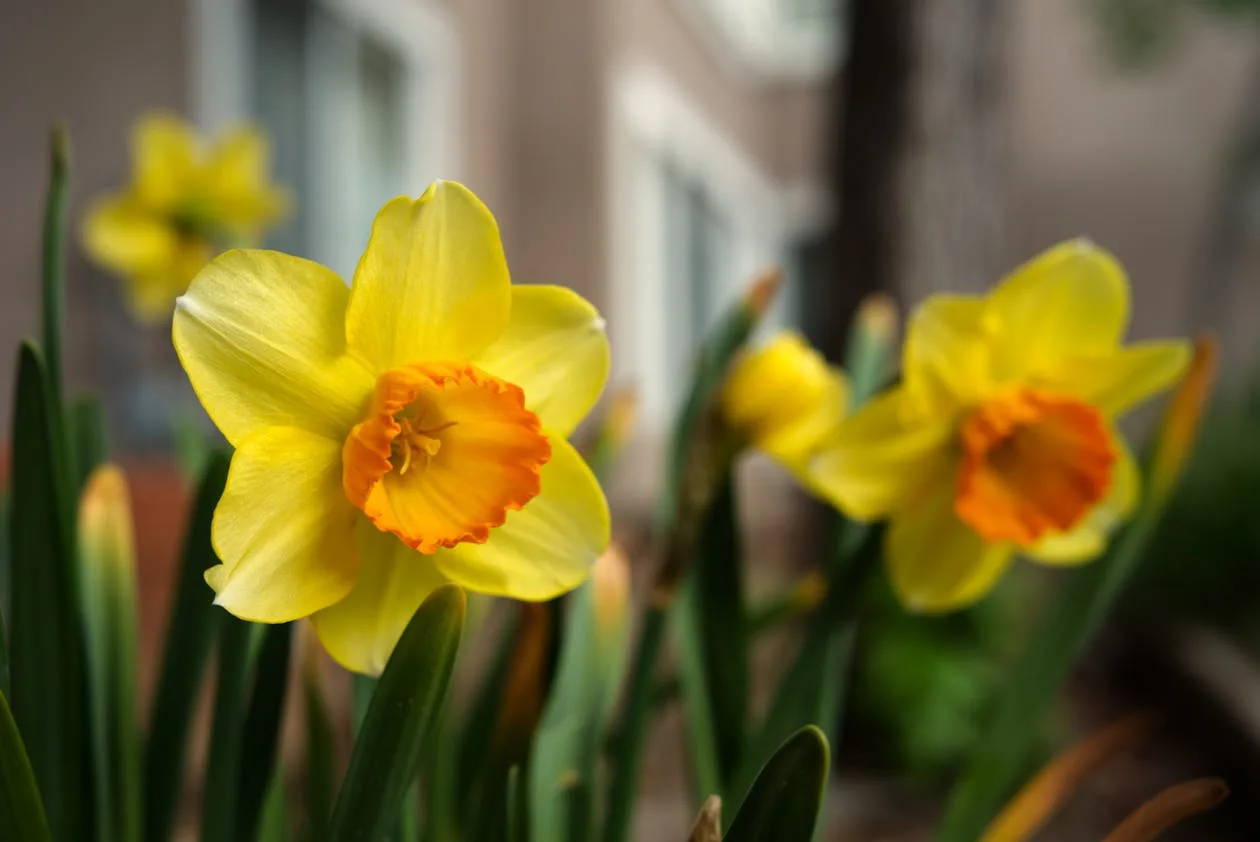
Few flowers are as deeply woven into British identity as the daffodil. It arrives each February and March with the reliability of an old friend, pushing through cold soil before anything else has dared to stir. Yet for all its familiarity, the daffodil is a surprisingly complex flower — a genus of more than 13,000 registered cultivars spanning every shade from ivory to deep saffron, with forms ranging from delicate multi-headed jonquils to bold, ruffled double varieties.
Understanding the genus: Narcissus explained
All daffodils belong to the genus Narcissus, a name borrowed from Greek mythology. The flower is split into 13 horticultural divisions, each defined by the shape and proportion of the corona — the central trumpet — relative to the surrounding petals, or perianth. Division 1 daffodils have a single flower per stem with a trumpet as long or longer than the petals. Division 8, by contrast, covers the sweetly scented Tazetta types with multiple small blooms per stem, popular in vases for their fragrance and volume.
The best varieties for cutting
'Jetfire' is a compact, early-flowering variety with reflexed yellow petals and an orange trumpet, beloved by florists for its reliability. 'Thalia' is a white, multi-headed variety with a gentle fragrance, ideal for bridal work. 'Tete-a-Tete' may be the most planted daffodil in Britain, producing two or three golden heads per stem and performing well both in pots and as a cut flower. For something more dramatic, 'Mount Hood' offers large, creamy-white blooms that age to pure ivory.
“The daffodil arrives not as decoration, but as announcement. It is the flower that tells the garden winter is done.”
Why daffodils should never share a vase
One of the most important practical facts about daffodils is that they exude a sap — narcissine — that is toxic to other cut flowers, particularly tulips. If you mix them in a vase, the tulips will collapse within hours. The solution is simple: condition daffodils alone in a bucket of water for at least six hours before combining them with other flowers, and never recut the stems once they have been conditioned. After conditioning, the sap flow slows significantly and they become safer companions.
Getting the most from cut daffodils
- Cut stems at a 45-degree angle while submerged in water to prevent air entering the stem
- Condition alone in cool water for six hours before mixing with other flowers
- Never recut conditioned daffodil stems — it reactivates the sap
- Keep away from direct heat and draughts: they prefer cool rooms
- Change vase water every two days; daffodils foul water quickly
- Remove fading blooms to encourage remaining buds to open
Meaning and symbolism
In the language of flowers, daffodils represent new beginnings, rebirth, and the return of happiness after difficulty. In Welsh tradition, the first person to spot a daffodil in spring is said to receive more gold than silver in the year ahead. The daffodil is also the symbol of the Marie Curie cancer charity, and wearing a paper daffodil pin in March has become one of Britain's most visible acts of charitable solidarity.
Growing daffodils in the UK
Daffodil bulbs are planted in autumn, ideally between September and November, at a depth of roughly three times the bulb's diameter. They are remarkably tolerant of British conditions and naturalise readily in grass, under trees, and along borders. The key rule after flowering is to allow the foliage to die back naturally — at least six weeks — before cutting it. The leaves are replenishing the bulb for next year's bloom, and cutting them prematurely results in progressively fewer flowers over time.
“Plant daffodils in autumn as a gift to your future self. By March, you will have forgotten they are coming.”
Continue reading
Spring Flowers: Britain's Most Beautiful Seasonal Blooms
From the first narcissi of February to the blowsy peonies of June, spring in Britain is a procession of extraordinary flowers. Here's what to look for — and when.
Read more →Seasonal Flower Guide: What's Blooming Right Now
The freshest, most beautiful flowers are always the ones in season. Here's your month-by-month guide to what's blooming in Britain — and why seasonal always wins.
Read more →
Why Chrysanthemums Deserve Far More Respect
Long dismissed as a supermarket standby, the chrysanthemum is in fact one of the most sophisticated and long-lived flowers available to British buyers. It is time to reconsider.
Read more →